Particular about your books? Picky about what your like to read? Hate having Karen or Debra or your old Aunt Suzie choose what book you’re going to slog through this month? Want dark romance when everyone else is stuck in personal development hell? No problem! Here, each month carries a theme or general idea, and you choose a book for yourself that fits into that theme. Then, we get together at the end of the month and discuss what we’ve read and share our thoughts and ideas together! The perfect group for those who struggle with a traditional book club experience!
Our first month’s theme is…Folklore!
You can read some traditional folklore of any area or country, read a book about folklore itself and how it comes to be, or pick a book about folkloric traditions, just as a few examples.
I chose a book on Folkloric Magic Traditions of the American South called Southern Cunning. 🙂 What will you choose?
Come join us over at the Choose Your Own Adventure Book Club here:
Hello, friends! This morning, I wanted to lay down some homeschooling tips that I have found helpful lately. These are my ten favorite ways to sneak some learning in every day for Little Maxwell (and me!) and it’s my hope that they might inspire you to come up with new and fun ideas too! Enjoy!
Number One: Storybots!
I love these little robots! I get that jaunty theme song stuck in my head all the time and I don’t mind it in the slightest. Ask the StoryBots is a tv show that we watch on Netflix and Youtube but they also have books, music, and a holiday special.
From their own Wikipedia page, ‘Subjects cover a wide range of topics and feature a cast of characters called the StoryBots, who are tiny, colorful robotic creatures…that live within our computers, tablets and phones and help humans answer questions.‘
They’re silly, fun, and so educational! Each episode centers around finding an answer for a video question from an actual kid. Seriously, I’ve learned so much from this show that I never expected and that is always a big plus in my book! Little Maxwell’s favorite episode is the one that talks about how the eye works, done with a Frankenstein-Mary Shelley-style twist! And the one that explains what happens when you flush the toilet.
Yup. What happens to the…solids.
Number Two: Horrible Histories!
Horrible Histories! My goodness, can I talk this up enough? This actually is a UK-based kids show featuring hilarious but educational takes on peoples, cultures, times, and places in history. It’s the avid brainchild of Terry Deary and was illustrated by Martin Brown. The book series was published by Scholastic and Horrible Histories has won 21 different screen awards (nominated for 19) including multiple BAFTA Children’s Awards. And the wildest part? Those were awards are only as of 2014.
20-HEKKIN-14!
I can believe it though! It’s so much fun for kids and adults! The educational value is paired with catchy music and dark, gross-out comedy that one can expect from something inspired by Monty Python. Horrible Histories celebrated their 25th anniversary in 2018 and, let’s face it, they’ll never be short of material! They even have their own Monopoly game!
I love love love these! Our first phonics book set was the BOB Books set from our local library and my nephew and Little Maxwell were so tickled when they were able to read all of each book after going through it once or twice. Those grins of triumph on their faces are worth every penny of the $13 these tend to cost.
That’s right! Simple. Inexpensive. Meaningful.
Reading to your kids!
Who knew, right? But studies have shown the huge benefit that reading to your little crotch goblins can have on their ability to acquire language.
That’s proper speech and learning to read, y’all!
Ugh. Can’t believe I said that. Okay, stereotypical backwoods yank lingo aside, reading to your kids does have clear, proven cognitive benefits, not just in language areas but in social, cognitive, and emotional ones as well. Check out this piece from PBS on exactly that.
Besides, couldn’t we all really benefit from more one on one time with our children? I know that Little Maxwell tends to act out, to be extra aggravating on purpose, when she feels that she hasn’t had as much time with me or Daddy Maxwell as she needs. Granted, she doesn’t have the emotional intelligence to recognize and tell us that herself (She IS only 3). That just means it’s even more important for us to make that time to avoid those situations altogether.
This leads us into our next option!
Number Four: Read-Along Books!
How is this any different than reading to your kids? Well, first of all, you aren’t doing the reading. What a Read-Along book does is display the pages of a book while reading out loud, usually highlighting the words as they are read. This allows the kids to make a cognitive connection between the words they’re seeing and hearing.
We read these all the time! There are some on YouTube but most of ours we get from the library on the Overdrive app. I did a previous post on Overdrive and I still stand by how much of an asset and a phenomenal resource it is for reading and learning purposes. Most of the books that do a read-along format are the Step Into Reading and I Can Read! leveled reader books that help kids pick up sight words and ease them into reading with their favorite familiar characters as well as the classics.
Number Five: YouTube and Netflix!
There is simply no shortage of topic-specific learning videos between the two of these. Netflix has gems like BBC’s Earth, Word Party, Super WHY, and many many more! YouTube is how we get our Daniel Tiger fix along with treasures like videos that teach languages to kids, Signing Time (a big deal in our house!), HomeschoolPOP!, and more than I could even count! This was how Little discovered and came to love Peter Rabbit through a read-aloud video. She also went through a period where all she wanted to watch was HooplaKidz, but only the Spanish version.
Not the English. Just Spanish.
It was actually fascinating to see! It was as if I count see her brain working and processing the different sounds and differences. It was so cool.
Number Six: Target dollar bins!
These. These are gold.
I am an admitted Target junkie. That’s right. Starbucks in hand and all. During the summer, especially at the beginning since that’s when a lot of homeschool years start, I spend way too much time going through those bins. All of the workbooks, activities, flashcards and so much more! It’s a goldmine!
Target is apparently very pro-homeschool because their dollar/discount section is always spilling over with home-ed items that time of year. I was so mad that I missed out on picking up some of the bilingual fairytale books they had last year! And the best part? It’s so inexpensive!
$1. $3. $5 at most!
Seriously, check it out. You won’t regret it.
Number Seven: Baking!
This is the most delicious way to teach practical maths! And that’s right. I say maths, because there isn’t just one overarching type of math! This is the best example, too. Different kinds of math can be learned while baking a simple batch of cookies or cooking dinner: weights, fractions, measurements, counting, etc, but also science!
Chemical reactions are a big part of baking after all and you have to learn what the properties of your ingredients are and how they affect the recipe as a whole.
Can you substitute baking soda with baking powder? No. Why?
“Baking soda is basic and will yield a bitter taste unless countered by the acidity of another ingredient, such as buttermilk. You’ll find baking soda in cookie recipes. Baking powder contains both an acid and a base and has an overall neutral effect in terms of taste. Recipes that call for baking powder often call for other neutral-tasting ingredients, such as milk. Baking powder is a common ingredient in cakes and biscuits.”**
Well, shit, I’m out of eggs. What do eggs do in the cake? They bind it all together. So what can I use that will also do that? Bizarrely enough, peanut butter or applesauce.
I could go on but I’m sure you get the idea! There is so much that an be learned and explored with cooking and baking. Encourage them to ask why and then discover the answers together! Don’t be afraid to experiment either! So what if some things come out a little…inedible. You’ll still have a wonderful memory and a bucket full of life skills learned as well! There will be no worries about if they’ll starve when they leave home!
Number Eight: Khan Academy/ABC Mouse
Okay, so I have a confession to make. I try so hard to be good about screen time. I do not think, for us at least, that too much screen time is healthy. Every single one of us in our household struggles with sleep. Well, Little Maxwell less so but Daddy Maxwell and I both have struggled with insomnia for as long as we can remember. Too much screen time for us tends to exacerbate those sleep disturbances.Also I’ve found that Little tends to get crankier and irritable the more screen time she has.
However, as any parent knows, the best laid plans of mice and men and all that rot.
Khan Academy and ABCMouse tend to be my exception to that rule. Of course a lot of us have heard about ABCMouse. It’s essentially a digital school for kids. No joke. Reading, maths, you name it. Also it tracks your child’s progress so that you can see where their strengths lie and which areas may need more attention, at least if you’re following a more traditional learning style.
Khan Academy Kids is much the same with two exceptions: it doesn’t track progress and it doesn’t cost anything. ABCMouse is subscription based and for that fee you get the personalization. Khan Academy Kids seems to take a more laid back approach. It tends towards the more minimalistic as well.
Little Maxwell tends to prefer KAK over ABCM. She loves the library section with it’s interactive read-along books!
I’ll actually be doing a deep dive comparison between these two so drop me a follow if you want to stay updated on my latest posts!
Number Nine: My First Atlas Book!
I try to incorporate maps, globes, etc. whenever I get the chance. I wasn’t taught much by way of geography in public school and I always considered that to be a huge failing. So now, Little Maxwell and I can explore and learn it together! We found this atlas at Barnes and Noble! It is just too freaking cool with it’s fold out pages and sections about the peoples, places, cultures, and animals.
Finding a “My First” atlas or similar book that’s specifically geared for kids can be essential! They usually are made to capture the child’s interest and that can be so important. Geography isn’t always the most fascinating subject. Then again, if you approach it with the mindset that it is, and you keep in mind what captures your child’s attention, it can turn into a fun and intriguing activity rather than a chore!
There are also plenty of games that utilize geography. The Ticket To Ride board game, Oregon Trail (also great history experience!), and several others!
Also, where in the world is Carmen Sandiego, anyway?
Number Ten: The Magic School Bus!
That’s right! The show that many of us watched as kids still stands up well today! The little ones in my family love this show and you know what? I love it too! There isn’t a single episode that goes by that I don’t come away from it feeling like I learned something. Currently, as of this post, the Magic School bus television show is available on Netflix. There’s even a reboot found there that is actually not horrible!
The Magic School bus is full of puns, 1990s cringe fest fashion, and of course, The Frizz herself! And of course you’ve got your expected dose of science.
So much science!
Little Maxwell loves dinosaurs! Photo by icon0.com on Pexels.com
So on your next rainy day, swap out that Sparkle and Shine with some OG Magic School Bus instead! You never know what they might learn next!
And that’s my 10 favorite tools for homeschooling Little Maxwell! I hope this list can be helpful to some of you as well. Let us know in the comments any of your favorite tools that you might want to share!
Hello all of our journeyers! Today, we’re bringing you more snapshots from our unschooling days! Just a few snippets from the things we’ve done over the past month. I hope you enjoy them and you’re able to get some ideas for yourself and your own family’s journey from these little pieces of our days! Enjoy!
Little Maxwell has become intrigued by words in books lately and she said she wanted to do school things this day. We went to her easel and worked on a letter of her choice: the letter K!
This was a very cool gift for Christmas from her Nana. It’s a blank puzzle that you can color or decorate however. Then you have a personalized puzzle! A perfect gift for the kid who adores a good jigsaw puzzle. These can be found online but this one in particular was actually found in the craft section of Target!
We can’t forget fun with friends! Little Maxwell has plenty of playmates in her cousins and friends. Seriously whoever believes that home educated kids aren’t ‘socialized’ has clearly never home schooled one. These kids will talk to anybody and make friends in any age group!
It’s never too early to start teaching them life skills. Even small things like helping do chores around the house. Young children especially love this because they love doing anything that they see you doing and that makes them feel ‘big’.
On our hanging map of the US, we’ve been going through slowly and adding the cities and towns of the people that we know who live in other states. It’s a great way to introduce some basic geography to kids that they can make a connection to that is relevant to them at this age.
This day we took recycled cans and turned them into seedling planters! Little Maxwell put polka dots on hers.
Little Maxwell decided she wanted to build the creation on the front of her magnetile box one day. Since some of the magnet tiles have been a little scattered around the house by now, we got as close as we were able. She was so proud!
It’s my hope that some of these might inspire you in your own journey, so please let us know in the comments if they do!
On this beautiful Saturday, I want to tell you about a movie that I saw on Netflix just two days ago. Why? In short: I have not been able to stop thinking about it. Here’s why.
My Life as a Zucchini (or in it’s original French, Autobiographie d’une Courgette) is a 2002 novel by the lovely author Gilles Paris, a man I had the distinct pleasure of talking to briefly just this morning. Although his book has been translated into twenty different languages, those regrettably do not include English.
The film, however, has.
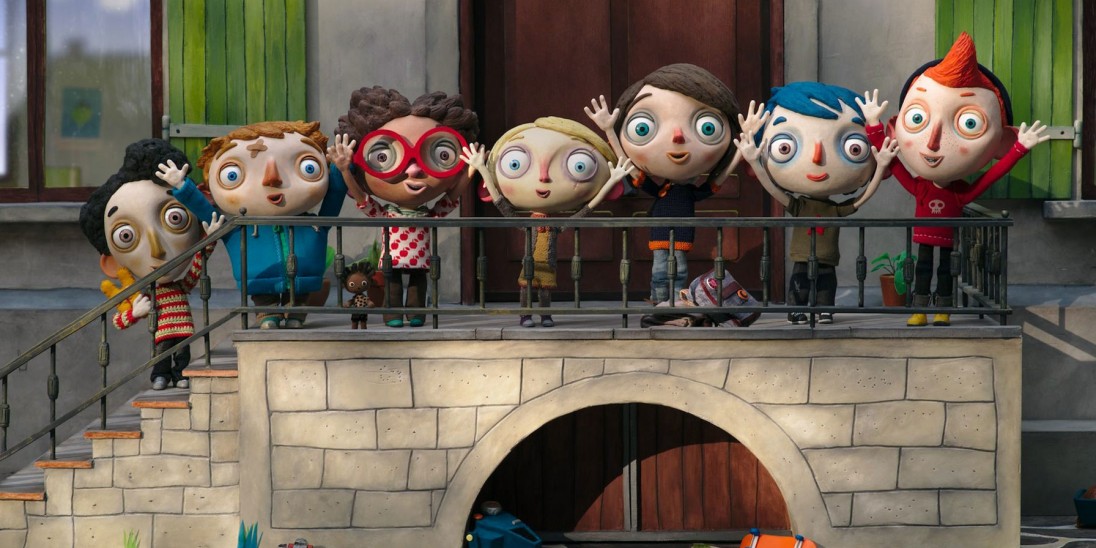
My Life As A Zucchini was adapted for audiences for the second time in 2016 as a Swiss-French film directed by Claude Barras in a stop-motion style, screening at the Cannes Film Festival and eventually going on to enjoy a tour at the 89th Academy Awards with an entry for the Best Foreign Language Film and Best Animated Feature Film.
I know that sounds good and all but…
Go watch this movie for yourself.
Please.
I’m telling you that it is so heartfelt, and not in all of those warm gooey ways that we usually associate with that word. No, it is grieving, it is warm. There is kindness and there is hatred. Greed and acceptance. There are angry words but it also contains hearts that are open to new loves. New lives.
Zucchini’s story is filled with the lost and lonely children that have “no one left to love them” as the boy, Simon, comes to tell him. Simon is a collector of stories, of the stories of all of the children that come through the orphanage, Fontaine’s. Each of them coming from the very worst situations that life has to offer.
Abuse, addiction, mental illness, deportation, a possible sexual abuse case, and eventually we see the child left behind after a jealousy-induced murder suicide.
These kids are the somber reminders that everything we do, our own issues and struggles, don’t just affect us. Our darknesses leave scars behind on more than just our own bodies and hearts.
image courtesy of intofilm.org
Zuchini won’t simply settle for having abuses happen to him anymore though, and neither will his friends. He is capable of making a mark on his situation, even changing it entirely. We see this as he closes the trapdoor on his abusive mother before the title screen even plays out. He dared to say no, to not just take a beating from someone who was supposed to love and care for him.
Granted, he didn’t mean it to knock her down the stairs but in closing that door on her abuse for what we can assume is the first time, he closes the door on that part of his life and the person that he once was. The Zucchini that was forever a victim of others and of his circumstances.
This becomes a sort of theme throughout the short movie where we see the children support and draw strength from one another in times of struggle and to slowly come to find themselves again. They find something else too, something almost as precious.
That there are adults who they can trust, and who want to be trusted.
Adults who can be actually kind, not just putting on a show of it in order to get something out of it.
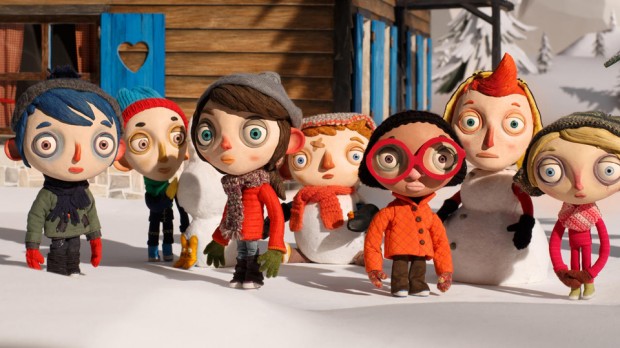
For a movie, there isn’t as much dialogue as you’d expect but so much is said through the brilliantly expressive characters that the creators have brought to life.
image taken from animationmagazine.net
And, oh my Lord and Lady, this scene! The kids are just looking on as a boy has a spill and his mum comes to comfort him. The two realize the unabashed audience they have pretty quickly but Zucchini and his friends don’t care. You become painfully aware while watching it that it’s because they simply aren’t used to seeing a mother comfort a child.
Yeah, no, it’s cool. Totally didn’t need my heart or my soul. Or those tissues wadded in the bin now. You keep those.
So, again, please. Go find this movie on Netflix or elsewhere. Read the book if you know any of the other languages it’s been released in! Give the author, Gilles Paris, some love, enough to send his heart melting.
I know that the tender story that he created certainly melted mine.
Hello, Journeyers! So I’ve been meaning to do this book review for some time. I’ve waited this long, not because I don’t like the book, but because I love this book. I wanted to make sure I was going to be able to do it justice. But at last I am here to bring you my take-aways from The Danish Way of Parenting!
I first heard about this book from one of my favorite YouTube channels, The Parenting Junkie. Seriously, check that out because Avital is such an amazing woman and she brings so much to the parenting community by way of education and advice. She even does live streams where you can ask questions about your own child-centered woes. Avital often references books and papers that offer more information on the topic at hand and she did just that in one of her multiple videos on alternative, peaceful parenting (playlist found here).
The Danish Way of Parenting is written by the amazing Jessica Alexander, wife of a Dane and psychologist/cultural researcher, and Iben Dissing Sandahl, a Dane herself as well as an internationally celebrated public speaker. Both women are mothers themselves using the Danish Way that they are now pioneers of. The book is published by TarcherPerigee, subsidiary of Penguin Random House, and had its debut on December 17th 2014, enjoying multiple editions since.
In it, the authors explain what it is that makes the Danish stand out and be named as the happiest people in the world (for almost 40 years in a row!) by the Organisation for Economic Co-operation and Development.
What makes the Danish so different? Do they have less problems? Fewer fears and aggravations? No! According to Alexander and Sandahl, it lies in the way that the Danes parent their children.
Sound odd? Think about it this way. We as humans are creatures of habit and tend to stick to what we know when it comes to parenting our own kids.
Ever heard someone say (or thought yourself), “Well I turned out alright!”?
People usually tend to parent the way they were parented because it’s what they know. The Danish are no exception!
Their parenting style is passed down to their children, and their kids’ kids, and so on to successive generations. In the words of the authors themselves, “resilient, emotionally secure, happy kids who turn into resilient, emotionally secure, happy adults who then repeat this powerful parenting style with their own kids. The legacy repeats itself, and we get a society that tops the happiness charts for more than forty years in a row.”
So what is it that the Danes do differently? The authors sum it up into one helpful device: PARENT.
Play– Why free play creates happier, better adjusted, more resilient adults.
Authenticity– Why honesty creates a stronger sense of self. How praise can be used to form a growth mind-set rather than a fixed mind-set, making your children more resilient.
Reframing– Why reframing can change you and your children’s lives for the better.
Empathy– Why understanding, incorporating, and teaching empathy are fundamental in creating happier children and adults.
No Ultimatums– Why avoiding power struggles and using a more democratic parenting approach fosters trust, resilience, and happier kids.
Togetherness and Hygge (Coziness)– Why a strong social network is one of the most important factors in our overall happiness. How creating hygge (coziness) can help us give this powerful gift to our children.
The book dives deep into each of these points, dedicating a chapter to each concept. Even as I read on, I couldn’t help but be pulled in with interest as the women gave examples of the Danish Way and easy to follow ways that you could implement for your own family!
For us in the Maxwell household, it has taken a heaping spoonful of patience, love, communication, and relearning what it means to engage with our child and really listen so that Little Maxwell feels heard. Already though, we are seeing a change in her behavior and a drastic difference in the stress and anger levels that come with having a three-year old overlord to appease.
So do I like this book enough to recommend it to you?
Abso- freaking- lutely.
Is it the easiest way to parent?
No, but while it may not be the easiest I heartily believe that it is one of the best ways to lead your family and your children to a happier, more compassionate, secure future.
Taking the road of peaceful parenting like the Danish Way is not easy. It involves finding more compassionate solutions to problems rather than the fear-based discipline. It eschews the threat/bribery method of taking away privileges and behavior charts.
We hail from a culture where not using punishments, whether physical or otherwise, to discipline our kids is frowned upon and sneered at. I’d know. I have faced down other people’s opinions on our parenting style multiple times. All of the raised eyebrows and “helpful” advice. So the Danish Way of Parenting is alternative to say the least. But if you feel called to try the Peaceful Parenting method, then I would tell you to pick up a copy of this book asap. Consider taking the Hygge Oath too!
If I could give this book a 1 out of 5 review, I would give it a solid 10. Give it a try! Even if the Danish Way isn’t for you, at the least you’ll walk away from it a little more aware of your own default settings and how they reflect on your own parenting style.
With Peace and Passion.
Ta! ❤
Learn more and engage with other peaceful parents at http://thedanishway.com/ ! Also find them on FB and Twitter.
Hello all of my journey takers and lifelong explorers! I recently read How To Raise A Wild Child: The Art and Science of Falling In Love with Nature and I want to talk about it!
This piece of literary magnificence is written by Scott Donald Sampson, and let me tell you: this man doesn’t just get a clap-and-a-half, he is the clap-and-a-half! Not only is he a prolific writer, he is a paleontologist by trade, and is currently President and CEO of Science World in British Columbia, Canada. He was previously Vice President of Research & Collections and Chief Curator at the Denver Museum of Nature & Science and is the presenter of the children’s television hit Dinosaur Train!
Sweet Red Hot Resumes, Batman!
So what is so significant about How To Raise A Wild Child? What makes it stand out so much as opposed to his other numerous achievements? After all, this is a post about his book, not the author himself.
How To Raise A Wild Child was a project that was many years in the making, an expose on our generation’s (and the generation we are now raising) ‘Nature Deficit Disorder’, a term coined by another author, Richard Louv, who also writes widely on our children’s need for nature in his book The Last Child In The Woods. A book that, like this one, I cannot recommend enough!
“Nature is a contact sport.”
I loved this book. I loved it while in the car. I loved it while eating lunch, walking under the great oak in my backyard. I even loved it once or twice in the forest, in front of my kid!
Okay, innuendo aside, this book is marvelous. It is beautifully descriptive, stunning in it’s imagery. The way Dr. Sampson speaks of his long adventures beneath the sun and the rain are inspiring, to say the least. His notes on the developmental delays and overall damage that a lack of outdoor exposure cause are just as worrisome.
His words will make you want to jump ship on the housework or work load that you’ve been drudging along beneath, kick off your shoes and go running barefoot through the woods, letting the grass tickle your toes.
As breathtaking as the imagery can be, How To Raise A Wild Child can be a difficult one to get through in one sitting so I recommend buying the book at the link below. Maybe listen to it on audiobook so you can get it in while folding laundry, on your commute, or during a good workout. That is my typical modus operandi nowadays but whatever way you chose, get your pen and paper pads ready and keep them close! You are going to want to take notes on this one!
It’s a brilliant read that was written for parents and teachers, often referring to “your kids” and “your classroom” in equal amounts. Dr. Sampson will have your head spinning with ways that you can incorporate more of the outdoors into your everyday, whether that be with twenty kids or with two.
So go, pick up this book! Loosen up and prepare to get dirty! Prepare to once again delight in finding crystals in a stone, a pond full of tadpoles and building a stick fort, all over again! Your childhood will come sweeping back to you and your children’s childhood will thank you for it.
Today, I’m diving into Zen As F*ck, a mindfulness journal by Monica Sweeney! So let’s pull out some deep breathing exercising that you use with your screeching tots and finding our f*cking center.
The first thing you notice, and that I have to say about this journal, is that it is absolutely f*cking beautiful. Every page is ornamented with watercolors in a stunning array of color that makes even the staunchest of grouches pull out their phone to snap a quick new background pic.
The second thing? The gratuitous swears and “happy-ass vibes” that fill every page to bursting like a rain cloud exploding into a rainbows raining multicolored candies down from the heavens!
What is the maximum velocity of a Skittle anyways?
The point of all of this is, go buy this f*cking book. It’s beautiful, packed with moments for your happiest and most frustrating moments, and a hilarious way to get all of that bullsh*t off of your chest!
Have you ever wanted to check out a book from the library or a movie to get your offspring distracted so you can finally finish those three day old dishes? Is it that time of year when it’s colder than a mother-in-law’s disappointed stare? Or hotter outside than Jason Mamoa? Or is it just one of those days when you don’t want to get out of your PJs but have to know what happens with that serial killer in the next book in the series?
Well wait no more!
Your local libraries have all paired with two apps called Overdrive and Libby. Today, we’re going to focus on Overdrive and then on the Libby app in the next seemed.
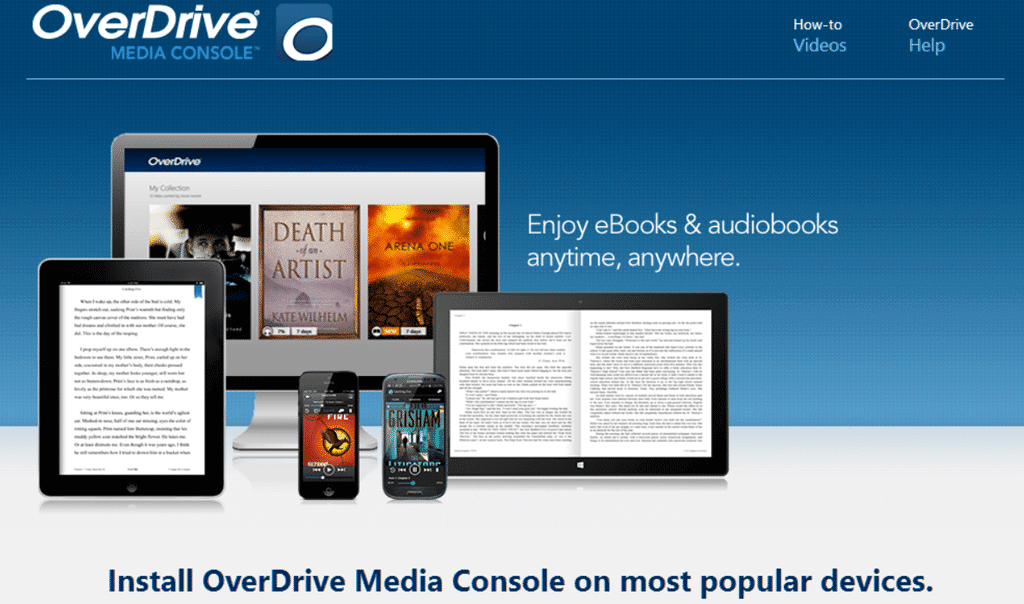
So, first of all, what is Overdrive? It sounds like some sort of Cloud or word processor, huh? Better! It is an online compilation of all of the digital library books available from participating libraries and so far I’ve yet to find a library not taking part. It boasts not just books either but videos, magazines, shows, audiobooks, and even read-along books for young kids just making the foray into becoming new readers! These are especially cool because many of them highlight each word as it is read so the kids learn to associate the word on paper (or screen) with the word they hear!
You can connect more than one library to your Overdrive app as well so you can check out books from all of them right from the same place! Book checkouts are immediate and are downloaded to your Bookshelf so you can even read or listen offline, with the exception of read-aloud books that are typically played in browser. And when your book is due, there’s no worry about overdue fees because your books are automatically returned for you. No muss no fuss!
I seriously cannot recommend Overdrive enough. We use it everyday at our home and have for quite some time now. I love using it for our homeschool! Each week, I can look up the books on our reading list or even different ones more geared for Little Maxwell’s young age without even having to leave my couch. A single day doesn’t go by that I’m not binging through audiobooks like ‘Will My Cat Eat My Eyeballs?‘ by Caitlin Doughty (see my book review for it!) or ‘The Dutch Way of Parenting’ by Jessica Joelle Alexander while I do dishes, laundry, or play a video game. Both books I highly recommend, by the way.
But how do you get Overdrive?
Well, my curious reader, it is available wherever apps are, of course! Your Google Play, Apple store and Amazon, of course but also on Android OS 4.0 and the Chrome webstore. It is also available for download on your Mac device, Windows 8 and 10 (by the way what happened to the 9, huh?), and for Windows desktop! That is a lot of options! That’s one of the things I love about it the most, in fact. I have Overdrive now on multiple devices and cannot overstate its general nifty-ness.
Let us know in the comments if you have Overdrive, your thoughts, or if you’re planning on giving it a try!
Can I just start by pointing out what a rad name Snickers McMuffin is for a cat?
I’ve been a long time fan of Caitlin Doughty’s YouTube channel Ask a Mortician. So, this being my first book of hers that I’ve read, I expected to enjoy ‘Will My Cat Eat My Eyeballs?’ just as much as I’ve enjoyed her channel.
Let me tell you, I was not disappointed.
First though, a bit about the author.
Caitlin Doughty is a mortician and owner at Undertaking L.A., a green funeral home who’s goal, according to orderofthegooddeath.com, “is placing the dying person and their family back in control of the dying process, the death itself, and the subsequent care of the dead body”. Caitlin is also the creator of The Order of the Good Death, a movement to change the dialogue and thoughts of modern day people in regards to death, dying, and death services. She hosts her Youtube channel, mentioned above, as well as a podcast called Death In The Afternoon. Both are, in my humble opinion, the bee’s-headbanging-death positive-knees-in-skinny-jeans. They’re witty but classy, funny but respectful, tasteful but quirky! Seeing either of these in my inbox is sure to make for a hilarious yet educational start to my day.
Much like her other work that I avidly enjoy and sincerely recommend, ‘Did My Cat Eat My Eyeballs?’ Is a piece filled with amusing insights, not only into how we as a culture view death but how children take that viewpoint in. Caitlin takes real-life questions from very much real-life, squirming children and answers them from the perspective of a death industry insider.
Questions like the titular “Will my cat eat my eyeballs” to “Can I be buried in the same grave as my hamster” are answered at length. These questions find an amusing friend in the illustrations by Dianné Ruz. My favorite question had to be “Will I poop when I die” though the most interesting to me had to be “Do conjoined twins always die at the same time”. You’ll just have to read the book to find out the answers!
All in all, I recommend giving it a read. Go check it out from your local library, pick up an audiobook on Audible (with Caitlin’s code ‘mortician’!), or grab it from your nearest and dearest bookstore! Also please check out the Ask A Mortician Youtube channel and Death in the Afternoon! You can even go to the Order of the Good Death’s website to join the movement! I know, after diving deeper into what the death positivity movement is all about, I did! I may do a piece on the Order itself and their tenets, so if that’s something you would be interested in, let me know down below in the comments!







 Little Journeys Everywhere