
Adventures In Unschooling · Primary

My Ten Favorite… Home Schooling Tools!

Hello, friends! This morning, I wanted to lay down some homeschooling tips that I have found helpful lately. These are my ten favorite ways to sneak some learning in every day for Little Maxwell (and me!) and it’s my hope that they might inspire you to come up with new and fun ideas too! Enjoy!

Number One: Storybots!

I love these little robots! I get that jaunty theme song stuck in my head all the time and I don’t mind it in the slightest. Ask the StoryBots is a tv show that we watch on Netflix and Youtube but they also have books, music, and a holiday special.

From their own Wikipedia page, ‘Subjects cover a wide range of topics and feature a cast of characters called the StoryBots, who are tiny, colorful robotic creatures…that live within our computers, tablets and phones and help humans answer questions.

They’re silly, fun, and so educational! Each episode centers around finding an answer for a video question from an actual kid. Seriously, I’ve learned so much from this show that I never expected and that is always a big plus in my book! Little Maxwell’s favorite episode is the one that talks about how the eye works, done with a Frankenstein-Mary Shelley-style twist! And the one that explains what happens when you flush the toilet.

Yup. What happens to the…solids.

hamstar


Number Two: Horrible Histories!

Horrible Histories! My goodness, can I talk this up enough? This actually is a UK-based kids show featuring hilarious but educational takes on peoples, cultures, times, and places in history. It’s the avid brainchild of Terry Deary and was illustrated by Martin Brown. The book series was published by Scholastic and Horrible Histories has won 21 different screen awards (nominated for 19) including multiple BAFTA Children’s Awards. And the wildest part? Those were awards are only as of 2014.

20-HEKKIN-14!

I can believe it though! It’s so much fun for kids and adults! The educational value is paired with catchy music and dark, gross-out comedy that one can expect from something inspired by Monty Python. Horrible Histories celebrated their 25th anniversary in 2018 and, let’s face it, they’ll never be short of material! They even have their own Monopoly game!

Check them out here at their website or on YouTube!

Number Three: Read Aloud Books!

I love love love these! Our first phonics book set was the BOB Books set from our local library and my nephew and Little Maxwell were so tickled when they were able to read all of each book after going through it once or twice. Those grins of triumph on their faces are worth every penny of the $13 these tend to cost.

That’s right! Simple. Inexpensive. Meaningful.

Reading to your kids!

Who knew, right? But studies have shown the huge benefit that reading to your little crotch goblins can have on their ability to acquire language.

That’s proper speech and learning to read, y’all!

Ugh. Can’t believe I said that. Okay, stereotypical backwoods yank lingo aside, reading to your kids does have clear, proven cognitive benefits, not just in language areas but in social, cognitive, and emotional ones as well. Check out this piece from PBS on exactly that.

Besides, couldn’t we all really benefit from more one on one time with our children? I know that Little Maxwell tends to act out, to be extra aggravating on purpose, when she feels that she hasn’t had as much time with me or Daddy Maxwell as she needs. Granted, she doesn’t have the emotional intelligence to recognize and tell us that herself (She IS only 3). That just means it’s even more important for us to make that time to avoid those situations altogether.

This leads us into our next option!

Number Four: Read-Along Books!

Santa, WTF?

How is this any different than reading to your kids? Well, first of all, you aren’t doing the reading. What a Read-Along book does is display the pages of a book while reading out loud, usually highlighting the words as they are read. This allows the kids to make a cognitive connection between the words they’re seeing and hearing.

We read these all the time! There are some on YouTube but most of ours we get from the library on the Overdrive app. I did a previous post on Overdrive and I still stand by how much of an asset and a phenomenal resource it is for reading and learning purposes. Most of the books that do a read-along format are the Step Into Reading and I Can Read! leveled reader books that help kids pick up sight words and ease them into reading with their favorite familiar characters as well as the classics.

Number Five: YouTube and Netflix!

There is simply no shortage of topic-specific learning videos between the two of these. Netflix has gems like BBC’s Earth, Word Party, Super WHY, and many many more! YouTube is how we get our Daniel Tiger fix along with treasures like videos that teach languages to kids, Signing Time (a big deal in our house!), HomeschoolPOP!, and more than I could even count! This was how Little discovered and came to love Peter Rabbit through a read-aloud video. She also went through a period where all she wanted to watch was HooplaKidz, but only the Spanish version.

Not the English. Just Spanish.

It was actually fascinating to see! It was as if I count see her brain working and processing the different sounds and differences. It was so cool.


Number Six: Target dollar bins!

These. These are gold.

I am an admitted Target junkie. That’s right. Starbucks in hand and all. During the summer, especially at the beginning since that’s when a lot of homeschool years start, I spend way too much time going through those bins. All of the workbooks, activities, flashcards and so much more! It’s a goldmine!

Target is apparently very pro-homeschool because their dollar/discount section is always spilling over with home-ed items that time of year. I was so mad that I missed out on picking up some of the bilingual fairytale books they had last year! And the best part? It’s so inexpensive!

$1. $3. $5 at most!

Seriously, check it out. You won’t regret it.


Number Seven: Baking!

This is the most delicious way to teach practical maths! And that’s right. I say maths, because there isn’t just one overarching type of math! This is the best example, too. Different kinds of math can be learned while baking a simple batch of cookies or cooking dinner: weights, fractions, measurements, counting, etc, but also science!

Chemical reactions are a big part of baking after all and you have to learn what the properties of your ingredients are and how they affect the recipe as a whole.

Can you substitute baking soda with baking powder? No. Why?

“Baking soda is basic and will yield a bitter taste unless countered by the acidity of another ingredient, such as buttermilk. You’ll find baking soda in cookie recipes. Baking powder contains both an acid and a base and has an overall neutral effect in terms of taste. Recipes that call for baking powder often call for other neutral-tasting ingredients, such as milk. Baking powder is a common ingredient in cakes and biscuits.”**

Well, shit, I’m out of eggs. What do eggs do in the cake? They bind it all together. So what can I use that will also do that? Bizarrely enough, peanut butter or applesauce.

I could go on but I’m sure you get the idea! There is so much that an be learned and explored with cooking and baking. Encourage them to ask why and then discover the answers together! Don’t be afraid to experiment either! So what if some things come out a little…inedible. You’ll still have a wonderful memory and a bucket full of life skills learned as well! There will be no worries about if they’ll starve when they leave home!


Number Eight: Khan Academy/ABC Mouse

Okay, so I have a confession to make. I try so hard to be good about screen time. I do not think, for us at least, that too much screen time is healthy. Every single one of us in our household struggles with sleep. Well, Little Maxwell less so but Daddy Maxwell and I both have struggled with insomnia for as long as we can remember. Too much screen time for us tends to exacerbate those sleep disturbances.Also I’ve found that Little tends to get crankier and irritable the more screen time she has.

However, as any parent knows, the best laid plans of mice and men and all that rot.

Khan Academy and ABCMouse tend to be my exception to that rule. Of course a lot of us have heard about ABCMouse. It’s essentially a digital school for kids. No joke. Reading, maths, you name it. Also it tracks your child’s progress so that you can see where their strengths lie and which areas may need more attention, at least if you’re following a more traditional learning style.

Khan Academy Kids is much the same with two exceptions: it doesn’t track progress and it doesn’t cost anything. ABCMouse is subscription based and for that fee you get the personalization. Khan Academy Kids seems to take a more laid back approach. It tends towards the more minimalistic as well.

Little Maxwell tends to prefer KAK over ABCM. She loves the library section with it’s interactive read-along books!

I’ll actually be doing a deep dive comparison between these two so drop me a follow if you want to stay updated on my latest posts!


Number Nine: My First Atlas Book!

I try to incorporate maps, globes, etc. whenever I get the chance. I wasn’t taught much by way of geography in public school and I always considered that to be a huge failing. So now, Little Maxwell and I can explore and learn it together! We found this atlas at Barnes and Noble! It is just too freaking cool with it’s fold out pages and sections about the peoples, places, cultures, and animals.

Finding a “My First” atlas or similar book that’s specifically geared for kids can be essential! They usually are made to capture the child’s interest and that can be so important. Geography isn’t always the most fascinating subject. Then again, if you approach it with the mindset that it is, and you keep in mind what captures your child’s attention, it can turn into a fun and intriguing activity rather than a chore!

There are also plenty of games that utilize geography. The Ticket To Ride board game, Oregon Trail (also great history experience!), and several others!

Also, where in the world is Carmen Sandiego, anyway?


Number Ten: The Magic School Bus!

That’s right! The show that many of us watched as kids still stands up well today! The little ones in my family love this show and you know what? I love it too! There isn’t a single episode that goes by that I don’t come away from it feeling like I learned something. Currently, as of this post, the Magic School bus television show is available on Netflix. There’s even a reboot found there that is actually not horrible!

The Magic School bus is full of puns, 1990s cringe fest fashion, and of course, The Frizz herself! And of course you’ve got your expected dose of science.

So much science!

Little Maxwell loves dinosaurs!
Photo by icon0.com on Pexels.com

So on your next rainy day, swap out that Sparkle and Shine with some OG Magic School Bus instead! You never know what they might learn next!

And that’s my 10 favorite tools for homeschooling Little Maxwell! I hope this list can be helpful to some of you as well. Let us know in the comments any of your favorite tools that you might want to share!

With Peace and Passion.

Ta!

**https://www.thoughtco.com/baking-soda-and-baking-powder-difference-602090

And in case the hyperlinks above don’t work for you:

horrible-histories.co.uk(opens in a new tab)

pbs.org/parents/thrive/why-reading-aloud-to-kids-helps-them-thrive(opens in a new tab)

Adventures In Unschooling · Parenting · Primary

Library Books From Home: Libby!

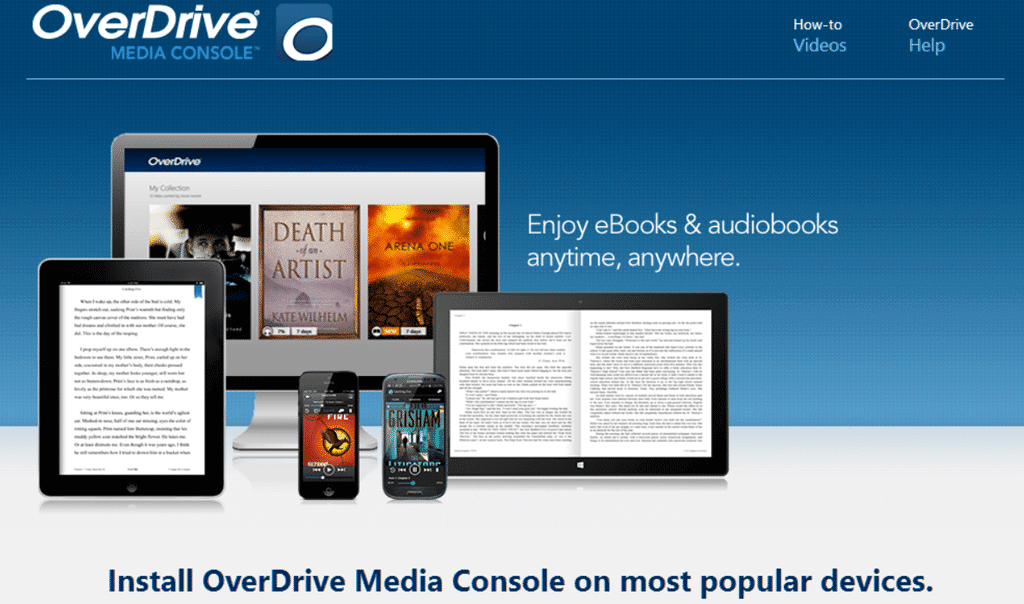
Image taken from resources.overdrive.com.

Libby is a companion app for the previously reviewed Overdrive library app, the both of which are put out by Overdrive Inc, a subsidiary of Japanese e-commerce giant Rakuten. Overdrive Inc also developed a book and audio book app specifically for schools called Sora that I will also be reviewing here soon! The three apps are used to connect library accounts and read or listen to books and magazines, watch videos and checkout resources from libraries where you hold an account, completely on the go! The best part? No late fees! Materials are removed automatically from your account and you even have the option to renew materials from the app as well! I’m pretty interested in checking out Sora tomorrow!

For today, however, we go to Libby.

It’s cute. That seems to be the prevailing commentary about it. I’ve had a local librarian comment when asked about it that Libby was user friendly and it’s interface is more simple. That it was cute, and to their credit, it is cute. Regrettably, that’s about the extent of It’s noteworthiness. My experience was quite the opposite of user-friendly. I found it to be very buggy whether on my Chromebook or on mobile. I can’t speak to how the iOS version is, but the Android version that I used was glitchy and frustrating. Granted, this is what I have to say about it as far as the end of 2019. I am certainly open to re-reviewing it in the future should these issues be addressed.

This list of issues and my thoughts on the app I do plan to send to the development team and I have refrained from leaving a starred review in hopes that these bugs will be fixed and I can review it again in the future. I had high hopes for Libby because I love and use the Overdrive app so much.

There isn’t a single day that goes by that I’m not using it for personal reading/listening or using it for our homeschool. I love that I can link my library accounts for two different local libraries as well as the account we have with the San Bernardino public library in California. We can check out books from all three libraries on a single app and it’s wonderful! I only wish I could say the same for the Libby app.

Granted, the bugs one person faces may not necessarily be an issue for another. Some apps can face similar issues if internet connection is sketchy or if the app is behind on an update, etc. I will be going into my review of the Sora app with an open and optimistic mind and that’s exactly what I hope you will do with Libby! If you face a  similar experience as I did then leave feedback! The developers for an app can only fix issues that their users know about after all!

With Peace and Passion.

Ta!

Adventures In Unschooling · Bliggety Blogs · Primary

Library Books From Home: Overdrive and Why It’s So Nifty!

Have you ever wanted to check out a book from the library or a movie to get your offspring distracted so you can finally finish those three day old dishes? Is it that time of year when it’s colder than a mother-in-law’s disappointed stare? Or hotter outside than Jason Mamoa? Or is it just one of those days when you don’t want to get out of your PJs but have to know what happens with that serial killer in the next book in the series? 

Well wait no more! 

Your local libraries have all paired with two apps called Overdrive and Libby. Today, we’re going to focus on Overdrive and then on the Libby app in the next seemed. 

So, first of all, what is Overdrive? It sounds like some sort of Cloud or word processor, huh? Better! It is an online compilation of all of the digital library books available from participating libraries and so far I’ve yet to find a library not taking part. It boasts not just books either but videos, magazines, shows, audiobooks, and even read-along books for young kids just making the foray into becoming new readers! These are especially cool because many of them highlight each word as it is read so the kids learn to associate the word on paper (or screen) with the word they hear! 

You can connect more than one library to your Overdrive app as well so you can check out books from all of them right from the same place! Book checkouts are immediate and are downloaded to your Bookshelf so you can even read or listen offline, with the exception of read-aloud books that are typically played in browser. And when your book is due, there’s no worry about overdue fees because your books are automatically returned for you. No muss no fuss! 

I seriously cannot recommend Overdrive enough. We use it everyday at our home and have for quite some time now. I love using it for our homeschool! Each week, I can look up the books on our reading list or even different ones more geared for Little Maxwell’s young age without even having to leave my couch. A single day doesn’t go by that I’m not binging through audiobooks like ‘Will My Cat Eat My Eyeballs?‘ by Caitlin Doughty (see my book review for it!) or ‘The Dutch Way of Parenting’ by Jessica Joelle Alexander while I do dishes, laundry, or play a video game. Both books I highly recommend, by the way.

But how do you get Overdrive?

Well, my curious reader, it is available wherever apps are, of course! Your Google Play, Apple store and Amazon, of course but also on Android OS 4.0 and the Chrome webstore. It is also available for download on your Mac device, Windows 8 and 10 (by the way what happened to the 9, huh?), and for Windows desktop!  That is a lot of options! That’s one of the things I love about it the most, in fact. I have Overdrive now on multiple devices and cannot overstate its general nifty-ness. 

Let us know in the comments if you have Overdrive, your thoughts, or if you’re planning on giving it a try!

With Peace and Passion.

Ta! ❤

Adventures In Unschooling · Primary

Nature Schooling/Homeschooling on a Dime!

We found a Male Box Turtle!

Wait what?!’ You might be thinking to yourself, ‘Surely this must be alliteration or some sort of scam, right? This broad is totally trying to sell me something.’

Wrong! 

That’s crazy, right? With the mainstreaming of homeschooling and even forest or nature schools (see my two part post on Nature school!), resources abound out there like they never have before. Organizations like the Homeschool Legal Defense Association, or HSLDA, stands between families who home educate and those who would try shady, underhanded, and even illegal tactics to block access. Basically, it has never been easier, better, or cheaper to home educate your family!

Yes, I said family. After all, they don’t call us lifelong learners for nothing! 

This post is going to focus mostly on cost-efficiency. As those of you who read my Nature Schooling posts may remember, we use the Exploring Nature With Children year-long curriculum from raisinglittleshoots.com and let me tell you, I cannot sing its praises more. It covers reading, poetry, science, classic art/classical music, nature studies (obviously), arts and crafts, gardening, writing, you name it. The only thing I would say it generally lacks is math skills but that’s easy to supplement with real world application. Real world application meaning not keeping your child in a “kid bubble”. 

What’s a “kid bubble”? It’s something we all do, honestly. Even me! It is when we tell our kids that they’re too little to do something, too young to help, that they can do it when they’re older. And I’ll admit it. Sometimes, it’s just less frustrating and more expedient to just do it yourself, but that isn’t a them problem, that’s a you problem. A me problem, as well, if I’m telling the truth. I’m not always as patient as I could be but it’s so important to nurture that desire in them to meaningfully contribute as early as possible because otherwise? You’re going to have a hell of a time getting them to want to if you wait until they’re tempestuous teens.

Your four year old son wants to help make dinner but you don’t want him to get in the way of the giant pot of boiling 5-alarm death lava? Have him set the table instead! Then he can go gather the rest of the family to the table. 

Your little girl wants to help with the dishes? How about having her put the silverware up or dry off the cups? 

Laundry? Have them match socks, empty the lint filter, or put in the softener sheets! Teach them how to fold hand towels or put shirts on hangers! My three year old loves doing these so don’t think they’re too young! If they’re showing interest, they’re ready!

Let them bring in grocery bags. Collect dirty laundry from around the home. Dusting, checking the mail, picking up sticks in the yard before mowing. Do you notice something about all of these tasks? They aren’t meaningless platitudes. They are legitimate steps of your tasks that you would otherwise have to do yourself. They are things they can do that meaningfully contribute to the running of the household. Doing this not only makes life easier on you but teaches them essential life skills that they would have to pick up on their own as young adults. 

Now how does all of that have to do with supplementing math skills? 

Baking and cooking involves basic addition, subtraction, fractions. It involves ratios and serving amounts, conversions and temperatures. These are all essential math skills but also practical ones! Let them help you do the shopping budget and then track how much you’ve spent as you gather groceries! As they get a little older, let them help balance a checkbook or even keep their own for their piggy bank. Just remember to check their math! Examples of other things are endless.

But back to cost-efficient educating! All of those math examples are just one aspect of a well rounded education after all. 

RaisingLittleShoots’ blog posts weekly supplemental resources and activities to go with that week’s theme as well as a free downloadable calendar of the themes for the entire year. If it is an option for you, please buy their curriculum to not only get the full, rounded experience but to help support all of the amazing work they do! That being said, using those weekly themes and resources, it is not difficult at all to pull together your own schooling experience from that.

For example, this week’s theme is Christmas Plants, which I am super excited for! The extra resources for this week are already up on the blog, so using those you can also go to a local friendly garden center and check out their seasonal offerings! Look up more and check out books on the plants there: what they are, where they grow, etc. 

There are herbs that grow year-round so you can do a tasting activity or use some to do some baking and sneak in some math skills. If you grow your own herbs, you could even talk about how they should be properly harvested and allow them to gather their own. This makes for an amazing sensory experience as well.

Go outside and have a plant hunt to see how many wintery plants you can find then sketch them in a journal, paint, or even make a model or diorama. The composer Vivaldi has musical pieces for each season but you can easily compile a playlist to listen to while you work or play. Find classical art pieces that may center around or include element of the theme. Learn about the history of it! Also I can’t say it more than I already do but YouTube, YouTube, YouTube! There are so, so many wonderful videos on every subject you can think of from science videos for kids to drawing or musical tutorials and more book reads and reviews than you could shake a whole tree at. 

As for standard homeschooling, all of this still applies! There are loads of free curriculums online and so many free printables that have really amazing things you can use. All of these cover the financial aspects of home educating but what about the legalities? Subscribe and follow to find out when I cover it in my upcoming post ‘The Legal Side: Homeschooling and the Law’!

With Peace and Passion.

Ta! ❤

Exploring Nature With Children: https://raisinglittleshoots.com/buy-exploring-nature-with-children/

Raising Little Shoots Blog: https://raisinglittleshoots.com/blog/

Free Calendar: https://raisinglittleshoots.com/exploring-nature-with-children-20192020-calendar/

HSLDA: https://hslda.org/content/